


Table of Contents
- Economic and Social Benefits of Buying from Indigenous Businesses
- How to Identify Authentic Indigenous Art and Social Enterprises
- The Broader Impact of Indigenous Social Enterprises: Community and Cultural Strength
- Frequently Asked Questions
Last Updated: September 13, 2026
Economic and Social Benefits of Buying from Indigenous Businesses
Supporting Indigenous social enterprises creates measurable economic and social value: money circulates through communities, funds employment, and keeps cultural knowledge alive. Dreamtimez Australia licenses artwork directly from Aboriginal and Torres Strait Islander artists, paying ongoing royalties on every sale.
Don't assume "Indigenous-owned" and "Indigenous-designed" mean the same thing. Ownership determines where profit lands; design licensing determines whether the artist is paid at all.
How to Identify Authentic Indigenous Art and Social Enterprises
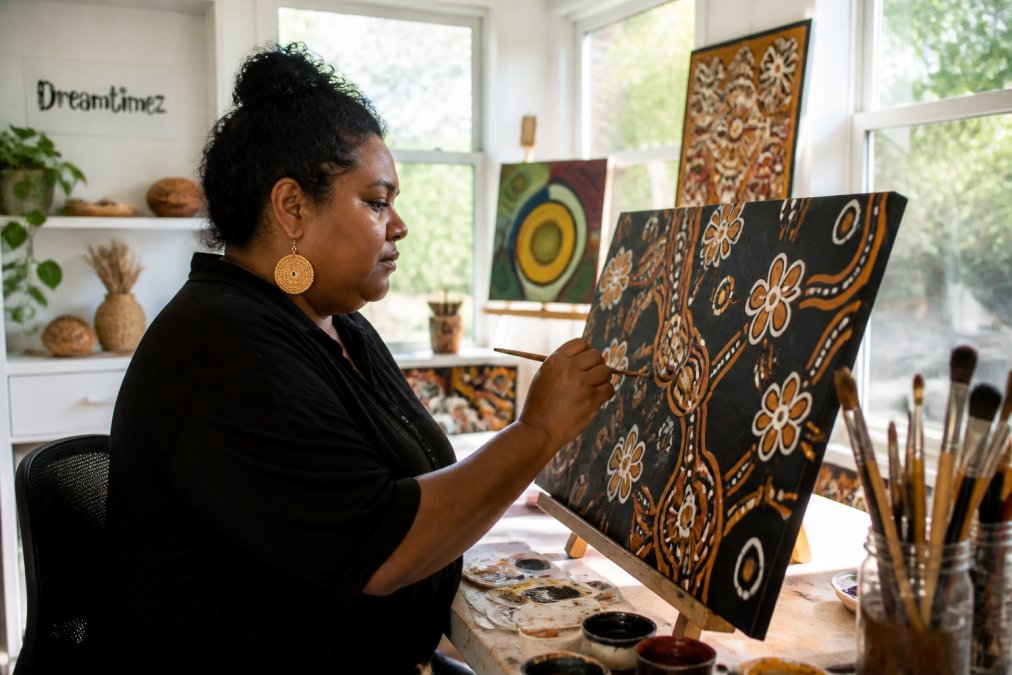
Authentic Indigenous art comes with a named artist, a licensing or supply agreement, and a clear statement of where the money goes (indigenousartcode.org). If a product has none of those three, treat it as decorative rather than cultural. The Indigenous Art Code sets out the standards signatories commit to, including fair payment and honest labelling, and it is the quickest reference point for buyers who want proof rather than marketing copy.
Use this checklist before you buy:
- Is the artist named, or credited only to a generic "community"?
- Does the seller state how the artist is paid?
- Is there a visible commitment to an art code or certification scheme?
- Can you find the artist's body of work independently of the retailer?
The Broader Impact of Indigenous Social Enterprises: Community and Cultural Strength
The wider impact shows up in jobs, cultural preservation, and community wellbeing. Indigenous social enterprises create employment pathways in regional and remote areas where mainstream job markets are thin, and keep cultural knowledge systems active by paying artists to practise and pass on their craft (aihw.gov.au). Social procurement and ESG frameworks now recognise this, so buyers increasingly ask suppliers to demonstrate Indigenous participation.
Many Indigenous enterprises are small and face real barriers to growth: limited capital, thin distribution networks, and the administrative burden of certification. Corporate partners that commit to volume, longer contracts, or advance orders do more than one-off goodwill purchases.
Supporting Indigenous social enterprises is straightforward once you know what to look for, but finding a supplier that genuinely pays its artists and can prove it remains the hard part. Dreamtimez Australia licenses artwork directly from Aboriginal and Torres Strait Islander artists, pays ongoing royalties on every sale, and donates part proceeds from every Fly Net Hat to the Royal Flying Doctor Service. Browse the collection and pre-order now.
Frequently Asked Questions
What are the primary benefits of supporting Indigenous social enterprises?
Supporting Indigenous social enterprises creates economic independence, jobs, and community wellbeing. These businesses often prioritise cultural preservation and social equity, reinvesting profits into community-led projects. For example, purchasing authentic art ensures royalties go directly to artists, strengthening cultural connections and addressing social disadvantage.
How can consumers identify authentic Indigenous social enterprises?
Look for transparency about artist licensing and royalty payments. Authentic enterprises often have certifications like Indigenous Art Code membership and clearly state their community partnerships. Check if they share artist stories and cultural protocols. Dreamtimez Australia, for instance, licenses designs directly from artists and supports the Royal Flying Doctor Service, ensuring ethical practices.
How do Indigenous-led businesses measure their social and cultural impact?
They use frameworks like social impact measurement and impact reporting, tracking outcomes such as job creation, cultural preservation, and community wellbeing. Many collaborate with First Nations communities to define success, ensuring systemic change and social value. This data helps partners and consumers understand the direct ROI and long-term benefits.