


Table of Contents
- Why Fair Trade Indigenous Products Matter
- 3 Simple Steps to Identify Authentic and Ethical Products
- Conclusion
- Frequently Asked Questions
Last Updated: September 7, 2026
Why Fair Trade Indigenous Products Matter
Authentic fair trade Indigenous products are living expressions of culture, history, and identity. This guide from Dreamtimez Australia helps you distinguish pieces that honour this heritage from mass-produced imitations.
Fair trade Indigenous products are created under ethical conditions where artists receive fair compensation and retain control over their cultural intellectual property.
3 Simple Steps to Identify Authentic and Ethical Products
Verifying whether products are genuinely fair trade requires a practical, three-step approach.
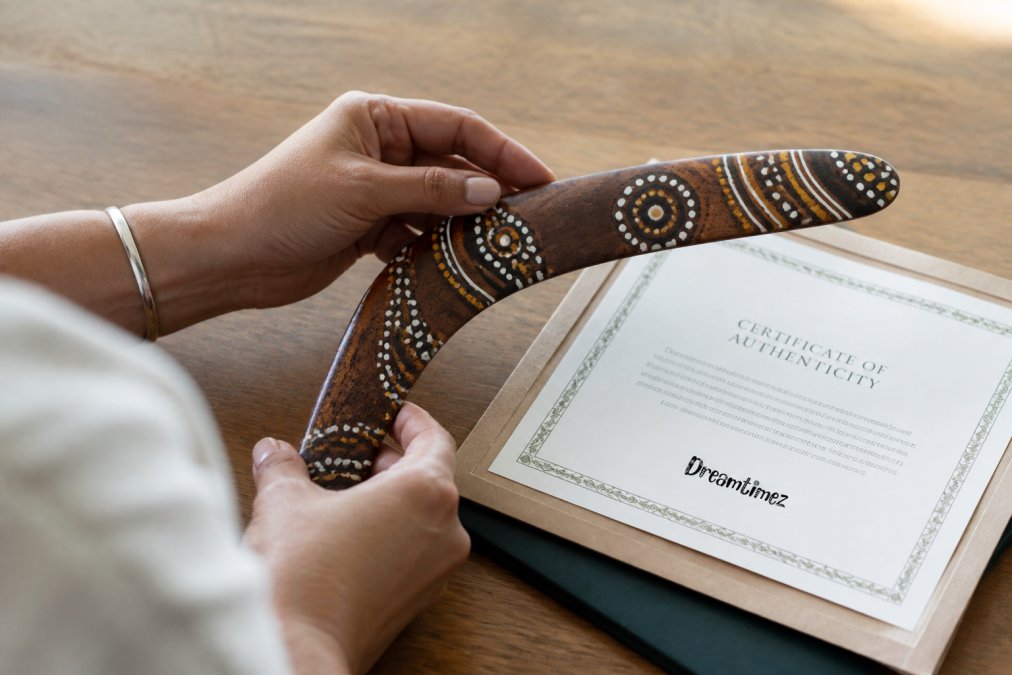
Step 1: Look for the Indigenous Art Code membership
The most reliable indicator is membership in the Indigenous Art Code, which promotes fair and ethical conduct in the Indigenous visual arts industry (indigenousartcode.org). According to the Indigenous Art Code's official guidelines, member businesses agree to pay artists promptly and respect cultural protocols.
Step 2: Verify the certificate of authenticity and provenance
Genuine products come with documentation tracing the artwork back to its creator. A legitimate certificate should name the specific artist, not just a community or region.
Step 3: Confirm direct trade and artist royalties
Fair trade Indigenous products involve direct trade relationships where the artist receives payment for each sale. Many ethical businesses license designs directly from Indigenous artists.
| Verification Check | What to Look For | Red Flags |
|---|---|---|
| Indigenous Art Code membership | Displayed membership credentials | No mention of ethical codes |
| Certificate of authenticity | Named artist and provenance details | Vague or missing documentation |
| Artist royalties | Direct licensing and ongoing payments | No artist payment information |
How can you identify fake Indigenous art?
Identifying fake Indigenous art involves examining the product's documentation, the seller's transparency, and the presence of proper cultural protocols. Products that use generic Aboriginal-style designs without artist attribution are likely inauthentic. Checking for Indigenous Art Code membership and verifying the business through the Australian Securities and Investments Commission database adds consumer protection.
What is the difference between ethical trading and fair trade?
Ethical trading focuses on broader supply chain conditions, while fair trade emphasises direct, equitable partnerships with producers. For Indigenous products, fair trade principles mean the artist retains control over their cultural intellectual property.
How do you verify an Indigenous-owned business?
Confirm the Australian Business Number (ABN) through the Australian Business Register and look for certification from recognised Indigenous business directories.
Why does provenance matter for ethical purchases?
Provenance provides the documented history of an artwork, confirming its authenticity and the artist's consent. For fair trade Indigenous products, provenance is evidence the supply chain operated with respect and transparency.
Conclusion
Shopping ethically requires shifting from passive consumption to active verification. By checking for Indigenous Art Code membership, confirming certificates of authenticity, and understanding direct trade relationships, you protect both cultural heritage and artist livelihoods.
Dreamtimez Australia demonstrates these principles through its licensing model, paying ongoing royalties directly to Indigenous artists on every sale. Each product carries authentic artwork with proper attribution, and part proceeds from every Fly Net Hat support the Royal Flying Doctor Service. Pre-Order Now and make your next purchase a meaningful contribution to cultural preservation.
Frequently Asked Questions
How can I verify if an Indigenous product is ethically sourced?
Start by checking if the seller is a member of the Indigenous Art Code. This membership signals a commitment to ethical trading with Aboriginal and Torres Strait Islander artists. Next, ask the seller who the artist is and how royalties are paid. An ethical business will be transparent about its supply chain and licensing agreements. Look for a certificate of authenticity that names the artist and their community.
What is the Indigenous Art Code and why does it matter?
The Indigenous Art Code is an industry code that promotes fair and ethical conduct in the trade of Indigenous art. It is a voluntary code that businesses can sign up to, demonstrating their commitment to transparency and fair dealing with artists. When a business is a member, it means they agree to follow a set of standards that protect the rights of artists, including fair payment and clear labeling.
Does Aboriginal art require a certificate of authenticity?
While not a legal requirement for all sales, a certificate of authenticity is a critical part of verifying fair trade Indigenous products. It provides a record of the artwork's provenance, identifying the artist and the work's story. Ethical sellers, including members of the Indigenous Art Code, will provide this documentation. It is a key tool for you to confirm you are supporting an authentic artist.