


Table of Contents
- What Makes Indigenous Homewares Worth the Investment
- How to Buy Aboriginal Art Ethically and Spot Authentic Pieces
- Where to Buy Aboriginal Art Online and the Role of the Indigenous Art Code
- Frequently Asked Questions
Is Buying Indigenous Homewares Worth It?
Last Updated: September 8, 2026
Whether buying Indigenous homewares is worth it comes down to one distinction: are you purchasing an authentic piece that supports a living culture, or a mass-produced souvenir? Dreamtimez Australia licenses designs directly from Indigenous artists and pays ongoing royalties on every sale.
What Makes Indigenous Homewares Worth the Investment
Authentic Indigenous homewares justify their cost through direct artist compensation, cultural preservation, and meaningful objects that carry a story. The price difference represents a real transfer of wealth: ethical retailers pay licensing fees and royalties directly to artists, while a mass-produced imitation funds neither the artist nor the community.
How to Buy Aboriginal Art Ethically and Spot Authentic Pieces
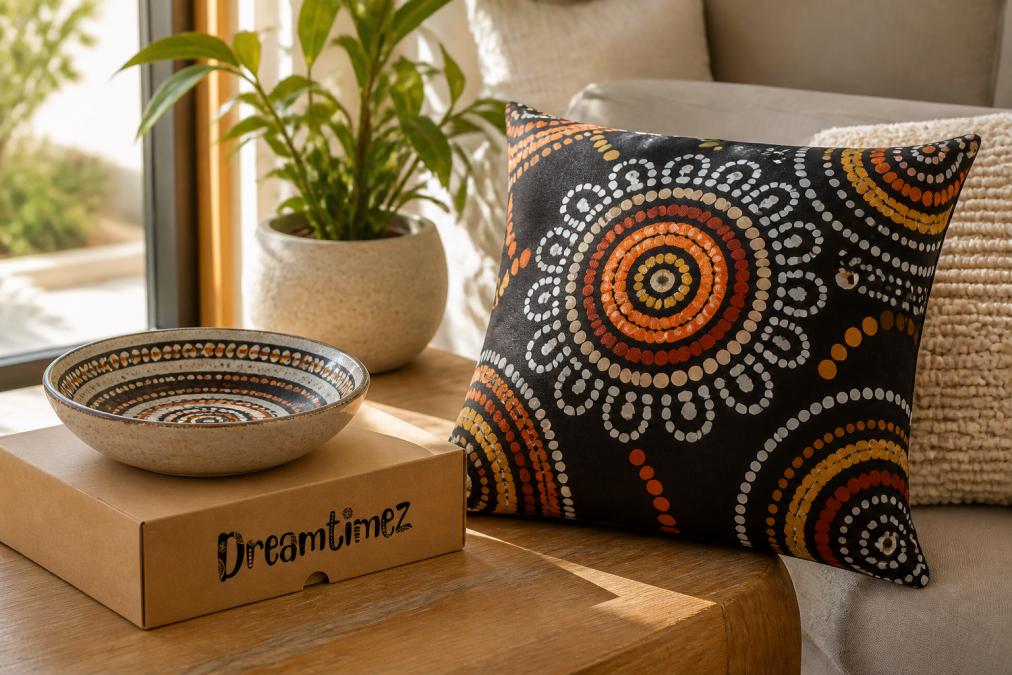
Learning how to buy Aboriginal art ethically starts with a simple habit: check whether the seller can name the artist and demonstrate a direct licensing arrangement. A common mistake is assuming "hand-crafted" or "Aboriginal-style" means authenticity.
The Indigenous Art Code provides an industry-standard framework that helps consumers identify ethical dealers who treat artists fairly.
Where to Buy Aboriginal Art Online and the Role of the Indigenous Art Code
Where to buy Aboriginal art online comes down to choosing retailers who demonstrate ethical supply chains and transparent artist relationships. The Indigenous Art Code's consumer resources offer a directory of compliant dealers, a practical starting point for any online purchase. When evaluating an online retailer, check whether the product page names the artist and community, states that designs are licensed directly, and commits to ongoing royalties.
| What to Check | Why It Matters | What to Look For |
|---|---|---|
| Artist attribution | Confirms provenance and fair compensation | Named artist with biography |
| Licensing model | Determines if royalties reach the artist | Direct licensing stated openly |
| Design authenticity | Avoids mass-produced imitation | Authentic First Nations designs only |
The real question behind "is buying Indigenous homewares worth it" is whether you value the story and the people behind the object. By choosing ethical retailers and verifying authenticity, you can shop with confidence that your purchase honours both the culture and its creators.
The challenge with buying Indigenous homewares is separating genuine cultural support from clever marketing. Dreamtimez Australia licenses designs directly from Indigenous artists, pays ongoing royalties on every sale, and contributes part proceeds from every Fly Net Hat to the Royal Flying Doctor Service. Explore the range and find a piece that brings meaning to your home.
Frequently Asked Questions
How can I ensure the Indigenous homewares I buy are authentic?
Look for retailers who license designs directly from Indigenous artists and pay ongoing royalties. Authentic products should include artist names and details about the artwork's story. Check whether the seller is a member of the Indigenous Art Code, which sets industry standards for ethical dealing. Avoid mass-produced items with generic 'Aboriginal-style' patterns that have no connection to a specific artist or community.
Does buying Indigenous-designed homewares actually support communities?
Yes, when you buy from ethical sources, your purchase creates meaningful employment and direct financial support for Indigenous artists and their families. Ethical retailers pay artist royalties on every sale, which contributes to economic sustainability and cultural preservation. The collective impact of conscious shoppers helps keep traditional knowledge and artistic practices alive for future generations.