


Table of Contents
- What Makes Aboriginal Art Ceramics Authentic
- The Indigenous Art Code and Ethical Sourcing
- Aboriginal Art Styles Northern vs Central Australia in Ceramics
- Ceramic Care and Maintenance Guide
- Certificate of Authenticity and Provenance
- Visual Authentication Checklist
- Ceramic vs Painting Investment Value
- Artist Spotlight Profiles
- Supporting First Peoples Artists and Communities
- Shipping and Delivery Standards
- Customer Testimonials and Reviews
- Frequently Asked Questions
Last Updated: September 16, 2026
What Makes Aboriginal Art Ceramics Authentic
Authentic aboriginal art ceramics are hand-coiled or wheel-thrown vessels made by First Peoples artists, sold with a certificate naming the artist and their community art centre. This guide from Dreamtimez Australia shows how to judge an authentic aboriginal art ceramics review before you spend money. A printed "authentic" card is not proof; what matters is the chain: artist, art centre, licensing agreement, and a royalty that reaches the maker.
The Indigenous Art Code and Ethical Sourcing
The Indigenous Art Code is a voluntary industry code committing signatories to transparent dealing, fair payment, and honest provenance when buying and on-selling First Peoples art, including ceramics. It gives you a named party to hold accountable. Indigenous Art Code official site
Ethical sourcing also covers royalties: when a design is licensed onto a ceramic piece, the artist should keep earning from ongoing sales.
- Does the seller name the artist and their community?
- Is there a certificate of authenticity with artist and art centre details?
- Can the seller explain how the artist is paid, including ongoing royalties?
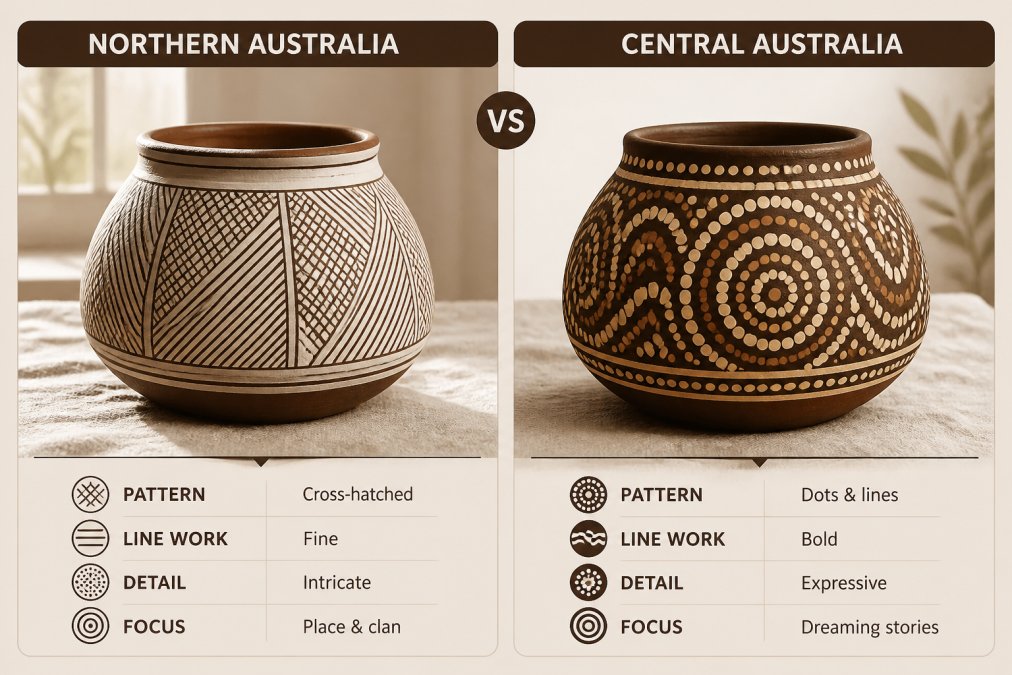
Aboriginal Art Styles Northern vs Central Australia in Ceramics
Central Desert work tends toward bold dot and line designs in earth pigments, while northern work often uses fine cross-hatching and sculptural, hand-coiled forms. What matters is that the seller describes the region and artist accurately, and that the design was used with permission.
Ceramic Care and Maintenance Guide
Hand-coiled and kiln-fired ceramics need gentler handling than mass-produced stoneware: wash by hand in warm water, avoid thermal shock, and keep decorated surfaces out of the dishwasher.
- Hand wash only; skip the dishwasher and harsh detergents
- Avoid sudden temperature changes, which can crack a hand-coiled body
- Display out of direct sun to slow pigment fading
Certificate of Authenticity and Provenance
A certificate of authenticity for Aboriginal art identifies the artist, the community or art centre, the title, and the medium, and confirms the work was made and licensed legitimately. Provenance is the wider trail: who made it, who sold it, and how it reached you. For ceramics, the certificate should state the design was licensed, not just that the object is "Indigenous style." Rigorous documentation remains the primary defense against imitation across all mediums, extending even to the complexities of identifying authentic artisan glass.
Visual Authentication Checklist
You can catch a lot of problems by eye before checking the paperwork.
- Design lines look hand-drawn, not mechanically repeated
- The form shows hand-coiling or throwing marks rather than a mould seam
- The artist and community are named on the piece or its tag
A mould seam around the base is the giveaway on mass-produced imitations.
Ceramic vs Painting Investment Value
Paintings have a long-established secondary market and clearer resale records; contemporary Indigenous ceramics are newer, with fewer comparable sales, making pricing harder to benchmark. Buy the artist and the provenance first, and treat any resale upside as a bonus.
Artist Spotlight Profiles
Specific artists anchor everything above. Sally Murray is one ceramicist whose work has featured in the travelling Clay Stories exhibition, which toured contemporary Indigenous ceramics and highlighted regional technique. Clay Stories exhibition coverage
Supporting First Peoples Artists and Communities
Every ethical purchase sends a signal: buying a licensed ceramic with a clear royalty structure pays the artist for the use of their cultural heritage, not just the object. Community-owned art centres represent artists, handle sales, and return income to remote communities, keeping cultural knowledge and artistic practice alive. Australia Council for the Arts
A design used with permission and paid for is artistic integrity; the same design copied without consent is not.
Shipping and Delivery Standards
Ceramics are fragile, so packaging and insurance matter as much as the piece. A reputable seller ships in double-boxed foam, insures the parcel, and provides tracking.
- Double-boxed packaging with foam or moulded inserts
- Transit insurance covering the full value
- A stated returns process for damage in transit
Customer Testimonials and Reviews
Reviews tell you how a seller behaves after the sale. Look for feedback on packaging, authenticity paperwork, and how problems were resolved. Dreamtimez Australia holds a 4.4 rating from 9 reviews, with recurring themes of cultural significance and the royalty model behind the pieces.
Frequently Asked Questions
How can you tell if Aboriginal art ceramics are real?
Check the certificate of authenticity first. A genuine certificate names the artist, their community or art centre, and the work's story or title. Look for hand-coiled or wheel-thrown forms with kiln-fired glazing rather than mass-moulded shapes, and confirm the seller is linked to an Indigenous-owned art centre or holds a direct licensing agreement with the artist.
Does Aboriginal art ceramics need a certificate of authenticity?
Yes. A certificate of authenticity is the standard proof of provenance for Aboriginal art, including ceramics. It should identify the artist, the originating community or art centre, and the work itself. Without one, you cannot confirm the piece was made by an Aboriginal artist or that royalties reach the creator, which matters for both cultural integrity and resale value.
Where can I buy authentic Aboriginal art ceramics?
Buy through Indigenous-owned art centres, galleries that follow the Indigenous Art Code, or brands that license designs directly from artists and pay ongoing royalties. Ask for the certificate of authenticity before purchase and check whether the seller names the artist and community.