


Table of Contents
- Aboriginal Art Styles: Key Differences
- Indigenous Australian Art Symbols and Storytelling
- Authentic Indigenous Art Identification
- Frequently Asked Questions
Last Updated: September 17, 2026
Aboriginal Art Styles: Key Differences
Aboriginal art styles from different regions of Australia reflect distinct cultural narratives, techniques, and spiritual connections to Country. The two most recognised traditions are Northern styles, X-ray art and bark painting from Arnhem Land, and Central Desert dot painting styles.
Northern Australian styles feature X-ray art, showing internal anatomy of animals alongside external forms, and rarrk (cross-hatching) using fine parallel lines for texture. Bark painting uses natural pigments on stringybark to depict Dreaming stories with symbolic imagery.
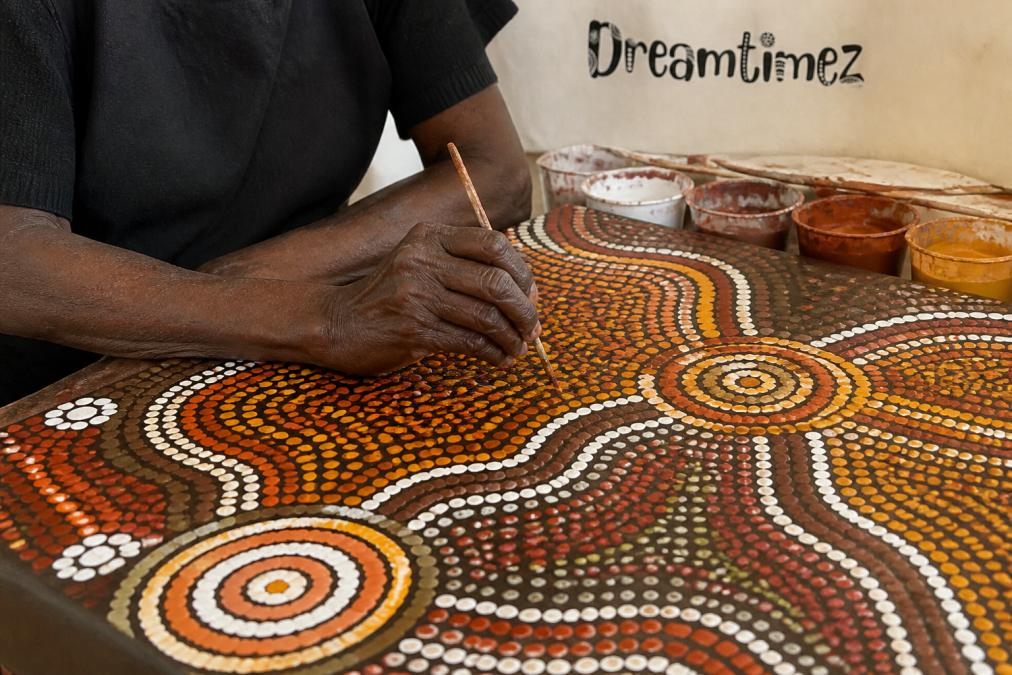
Central Australian dot painting developed from traditional body art and sand drawings, using dots of ochre to create geometric patterns representing ancestral beings and sacred sites. The style gained international recognition in the 1970s when Papunya artists translated traditional designs onto canvas.
| Aspect | Northern Styles (Arnhem Land) | Central Desert Styles |
|---|---|---|
| Primary Technique | X-ray art, rarrk, bark painting | Dot painting, geometric patterns |
| Canvas/Medium | Bark, natural materials | Canvas, board |
| Pigments | Natural ochres, charcoal, clay | Acrylic, natural ochres |
| Spiritual Focus | Hunting knowledge, ancestral beings | Dreaming stories, sacred sites |
| Visual Pattern | Anatomical detail, cross-hatching | Concentric circles, geometric symbols |
| Regional Origin | Arnhem Land, Top End | Papunya, Western Desert, Central Australia |
Indigenous Australian Art Symbols and Storytelling
Aboriginal art symbols carry profound meaning: a single dot represents a campsite, concentric circles depict a waterhole, lines indicate travelling routes, and curved shapes represent ancestral beings. They form a visual language encoding knowledge about Country, law, and spiritual connection.
Each artwork documents Dreaming narratives explaining how the land was created and how people should live. Northern X-ray styles reveal animal anatomy used in hunting; Central Desert traditions layer symbols into complex narratives visible to initiated members and external viewers alike.
Authenticity depends on the artist being Indigenous and the design originating from their cultural Country. Dreamtimez Australia licenses designs directly from Indigenous artists, ensuring cultural protocols are respected.
Authentic Indigenous Art Identification
Verify the artist's Indigenous heritage and connection to the Country depicted. Authentic artwork includes documentation of the artist's name, language group, and Dreaming story.
Look for consistency between artistic style and cultural region, though contemporary Indigenous artists may blend styles.
Quality of execution, precision in dot placement, balance in composition, and depth of cultural knowledge distinguish genuine work from mass-produced imitations.
Beware of artwork lacking artist attribution or cultural context. Genuine pieces include the artist's story, Dreaming narrative, and language group.
When purchasing, ask sellers to name the artist, explain the Dreaming story, and provide documentation of Indigenous heritage. Transparent sellers welcome these questions.
Frequently Asked Questions
What are the main visual differences between Northern and Central Aboriginal art?
Northern art, particularly from Arnhem Land, features x-ray techniques showing animal bone structure and internal organs, plus cross-hatching patterns called rarrk. Central desert art emphasises dot painting using ochre and natural pigments to represent Dreaming stories and Country. Northern styles often use bark as a canvas, while Central artists favour canvas and paper with geometric patterns and symbolic dots.
How can I identify authentic Indigenous Australian art symbols?
Authentic Indigenous art carries provenance documentation linking it directly to the artist and community. Look for consistent cultural symbolism: concentric circles and dots in Central work represent waterholes and ancestral beings; x-ray depictions in Northern art show anatomical detail and spiritual knowledge. Purchase from licensed retailers who work directly with artists and provide certification of authenticity and artist attribution.
What is the significance of dot painting in Central desert art?
Dot painting emerged from traditional body decoration and sand drawings used in ceremony. Each dot, line, and pattern encodes Dreaming narratives, stories of ancestral beings, Country, and spiritual connection. The technique transforms sacred knowledge into visual form, allowing artists to share cultural identity and connection to land while maintaining the spiritual integrity of the stories depicted.
Choosing authentic Aboriginal art means supporting Indigenous artists and their communities. At Dreamtimez Australia, we work directly with Indigenous creators to bring their stories into your home and everyday life. Every purchase supports the artists behind the work and contributes to preserving cultural knowledge for future generations.