


Table of Contents
- Why Authenticity Matters When Buying Indigenous Products
- How to Identify Authentic Aboriginal Art and Designs
- Understanding the Indigenous Art Code and Ethical Standards
- Supporting Aboriginal Artists Through Royalties and Fair Trade
Why Authenticity Matters When Buying Indigenous Products
When you buy authentic indigenous products, you're deciding whether your money supports the actual creator or flows to middlemen who've copied their work without permission. Genuine Indigenous art carries cultural integrity rooted in traditional knowledge and Dreamtime stories (aiatsis.gov.au). Counterfeit products strip away that meaning entirely, they're designed to fool casual buyers but carry none of the artist's expression, cultural significance, or creative investment.
Choosing authentic indigenous products directly supports the communities and artists behind the work. Purchasing mass-produced imitations perpetuates a cycle that harms the very people whose cultural heritage is being exploited.
How to Identify Authentic Aboriginal Art and Designs
The easiest way to verify authenticity is to trace provenance directly to the artist. Legitimate sellers can show documentation proving the artwork's origin, the artist's name, and the licensing agreement that authorises design use.
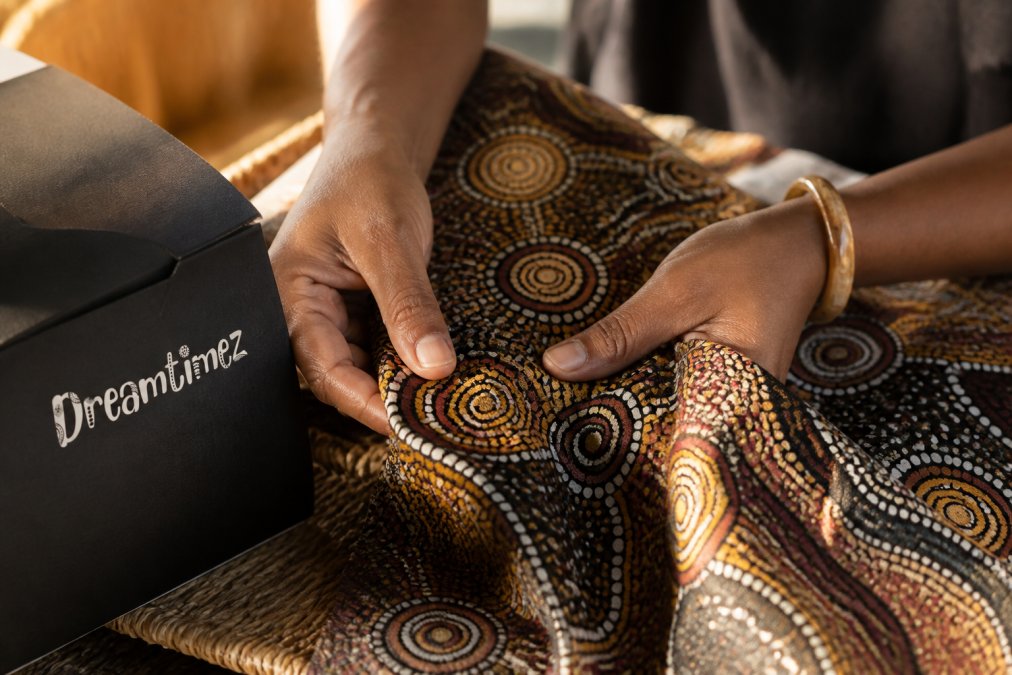
Look for these markers of genuine Indigenous art:
- Artist attribution: The creator's name and community affiliation are clearly stated
- Certification or licensing agreement: Documentation showing the artist has authorised the design's use
- Supply chain transparency: You can trace where the product was made and who received compensation
- Handcrafted elements: Variations that indicate human creation rather than mass production
- Cultural context: Information about the Dreamtime story, traditional knowledge, or artistic significance behind the design
Mass-produced alternatives typically lack this documentation. Asking sellers directly, "Can you show me the artist's licensing agreement?", is your most powerful verification tool. Authentic creators and ethical retailers welcome this question. Those without legitimate documentation will deflect or disappear.
Understanding the Indigenous Art Code and Ethical Standards
The Indigenous Art Code establishes standards for authentic Indigenous artwork and sets expectations for fair trade practices, artist compensation, and ethical representation of cultural intellectual property (indigenousartcode.org). When a product carries legitimate Indigenous Art Code compliance, the seller has committed to transparency about the artist, artwork origin, and fair compensation structures (indigenousartcode.org).
Understanding cultural appropriation versus appreciation matters here. Appreciation means engaging respectfully with Indigenous design: buying directly from artists, learning the stories behind the work, and ensuring creators benefit. Appropriation means extracting the aesthetic without acknowledging the source, compensating the artist, or respecting cultural significance.
Recognising cultural appropriation requires asking: Does this product honour the artist's intentions? Does the creator receive fair compensation? Can I trace the supply chain back to an actual Indigenous artist?
Supporting Aboriginal Artists Through Royalties and Fair Trade
Direct trade relationships between artists and retailers fundamentally change outcomes. When you buy from a business that licenses designs directly from Indigenous artists, ongoing royalties flow back to the creator with every sale, recognising the artist's continued intellectual property rights.
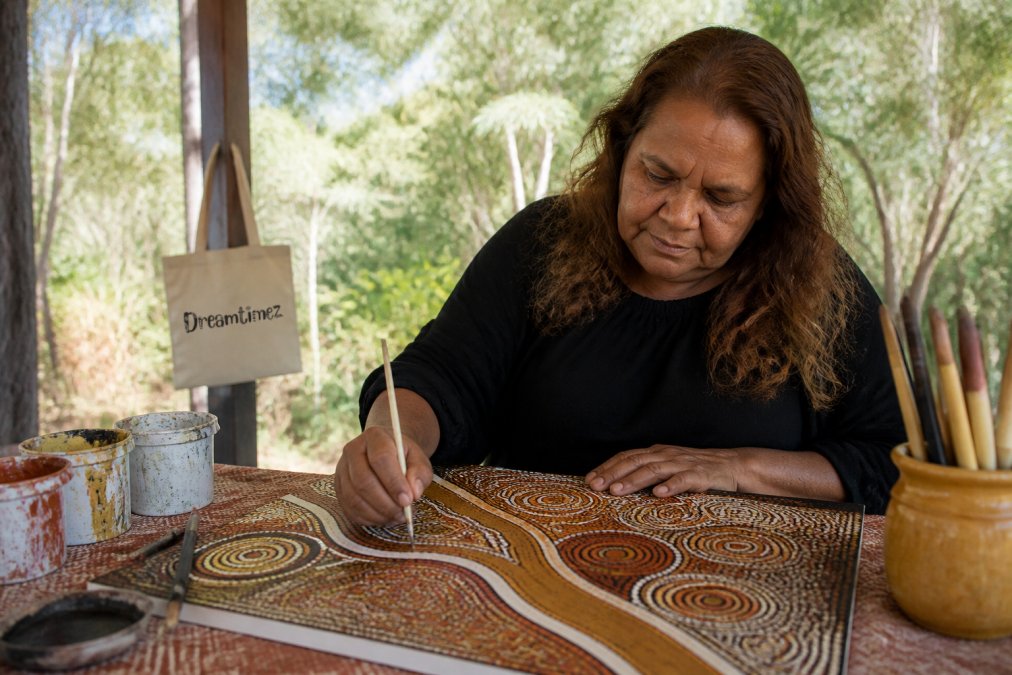
Fair trade practices in Indigenous art mean:
- Artists retain ownership of their cultural intellectual property
- Licensing agreements clearly define how designs can be used
- Royalties are paid consistently and transparently
- Communities benefit from the commercial success of their cultural heritage
- Consumer protection standards prevent misleading conduct about product origins
When you choose authentic indigenous products from ethical retailers, you're investing in a supply chain that works. The artist receives recognition and compensation. Their community benefits from the commercial value of their cultural expression. You receive a product with genuine meaning rather than a hollow imitation.
Buying authentic indigenous products is an act of respect and economic support. You're funding the artists and communities behind the work, rather than manufacturers profiting from their designs without consent. Dreamtimez Australia connects you directly to Indigenous creators through licensed designs and transparent supply chains, ensuring your purchase matters to the people who made it. Explore our collection and discover how your choice supports both cultural preservation and fair trade.
Frequently Asked Questions
Q: How do I know if an Indigenous design is ethically licensed?
A: Look for clear attribution to the artist and licensing information. Authentic Indigenous products should display the artist's name and community. The Indigenous Art Code sets standards for ethical representation. Reputable retailers provide provenance details and can explain the licensing agreement between the artist and the business. Ask sellers directly about their sourcing practices and artist relationships.
Q: What is the Indigenous Art Code and how does it protect artists?
A: The Indigenous Art Code is a voluntary industry standard that promotes ethical trading and protects cultural intellectual property. It ensures artists receive fair compensation, maintains cultural integrity, and prevents misrepresentation of Indigenous designs. Businesses that follow the code commit to transparency about artist involvement and ongoing royalties. This framework helps consumers identify authentic products and supports direct trade relationships that benefit communities.
Q: Why should I pay more for authentic Indigenous products when mass-produced alternatives are cheaper?
A: Authentic Indigenous products represent genuine artistic expression and cultural heritage. When you purchase authentic items, your money directly supports the artist and their community through ongoing royalties. Mass-produced knock-offs exploit cultural designs without compensating creators and dilute the cultural significance of the work. Hand-crafted, licensed pieces offer superior quality, meaningful provenance, and the knowledge that your purchase contributes to cultural preservation and fair compensation for First Nations artists.
This article was written using GrandRanker