


Table of Contents
- Why Supporting Indigenous Creators Matters
- Where to Buy Aboriginal Art Online
- How to Identify Authentic Indigenous Art
- Understanding Indigenous Cultural and Intellectual Property Rights
Last Updated: August 24, 2026
Why Supporting Indigenous Creators Matters
When you buy Indigenous art directly from creators or through ethical retailers, you're participating in cultural preservation, economic empowerment, and the protection of First Nations intellectual property rights. This guide walks you through how to support indigenous creators with confidence, ensuring your purchases genuinely benefit the artists and communities behind the work.
Supporting Indigenous creators means understanding the difference between ethical engagement and cultural appropriation. First Nations artists have fought for decades to protect their cultural and intellectual property rights, and your purchasing decisions matter in that ongoing effort (aiatsis.gov.au). When you buy from sources that license designs directly from artists and pay ongoing royalties, you're affirming that their work has intrinsic value and deserves fair compensation.
Where to Buy Aboriginal Art Online
The most important step in how to support indigenous creators is choosing the right marketplace. Look for retailers that explicitly state they license designs directly from First Nations artists and pay ongoing royalties. These businesses typically display artist names, their language groups, and the stories behind each design.
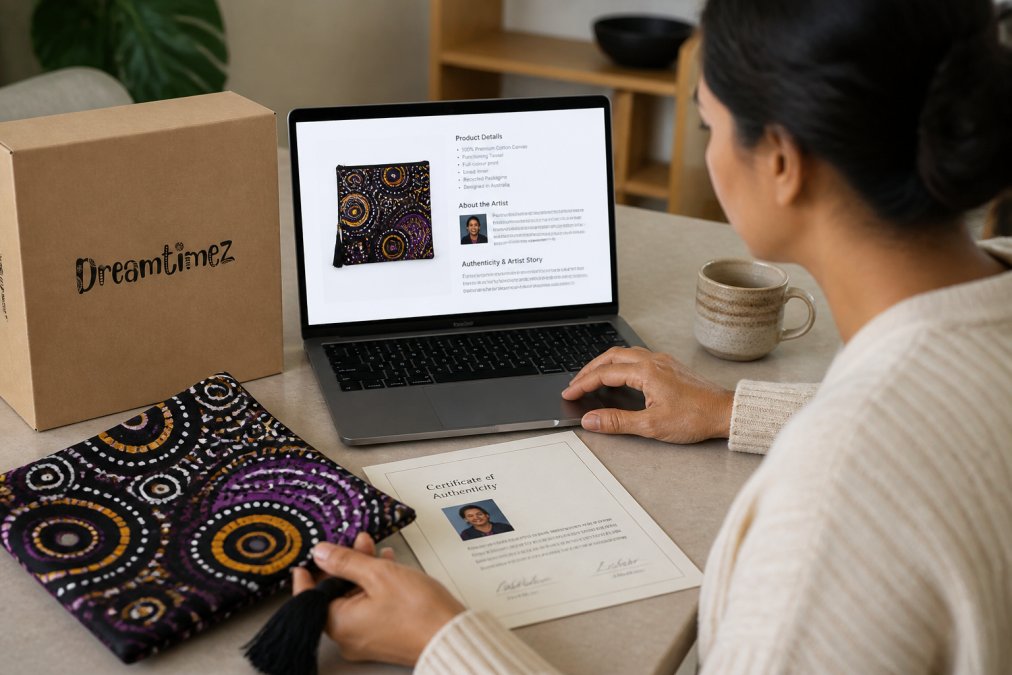
Reputable online retailers feature:
- Named artists with their cultural background and language group
- Clear statements about licensing agreements and royalty payments
- Artist bios and the cultural significance of their designs
- Certifications or recognition from Indigenous arts organisations
When browsing, check whether the retailer explains how they work with artists and acknowledges cultural protocols in how they present the work. Some retailers also partner with organisations like the Royal Flying Doctor Service, directing proceeds from specific products back to community support.
How to Identify Authentic Indigenous Art
Authenticity matters because the market for Indigenous-inspired designs has attracted counterfeiters and non-Indigenous creators capitalising on the aesthetic without understanding the cultural significance.
Authentic Indigenous art comes with documentation of the artist's identity, language group, and the cultural meaning embedded in the design. Ask: Can I find the artist's name? Is their community or language group mentioned? Does the product description explain what the artwork represents culturally?
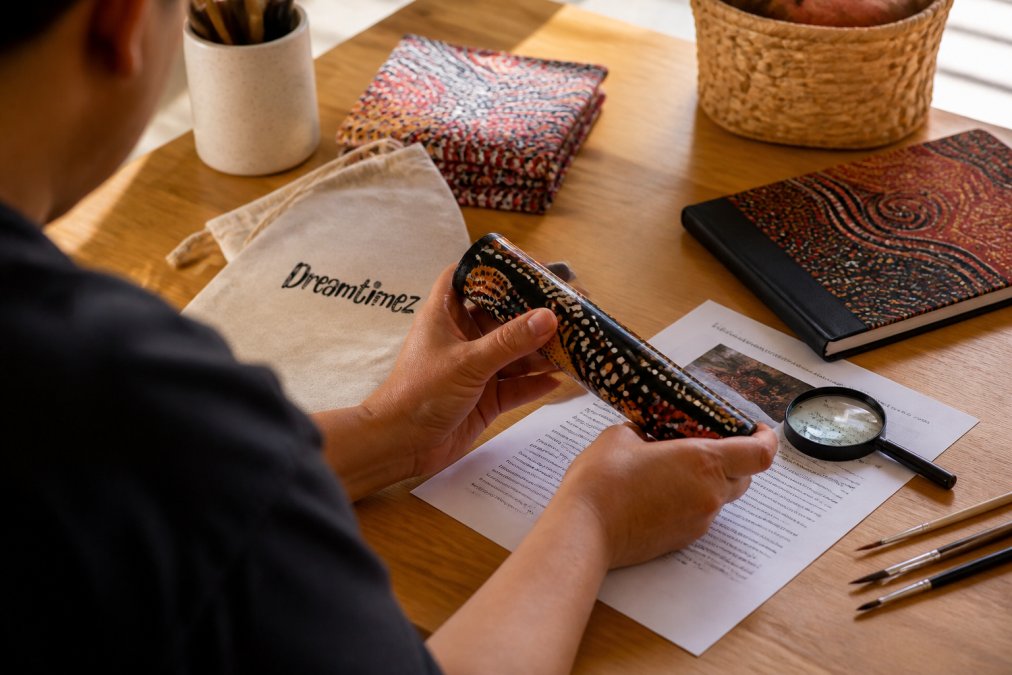
Key markers of authenticity include:
- Artist attribution: The creator's name, language group, and art centre affiliation are clearly stated
- Cultural context: The design's meaning and cultural significance are explained
- Licensing transparency: The retailer states whether the artist has been compensated and how ongoing royalties work
- Industry standards: Look for mention of peer-assessed practices or compliance with Indigenous arts industry standards
- Community connection: Documented relationships with art centres or Indigenous cultural organisations
Be cautious of listings using generic phrases like "inspired by Indigenous art" or "Aboriginal-style designs" without naming the artist.
Understanding Indigenous Cultural and Intellectual Property Rights
Indigenous Cultural and Intellectual Property (ICIP) rights protect First Nations people's ownership of their designs, stories, symbols, and cultural knowledge (aiatsis.gov.au). Under Australian law and international frameworks, Indigenous creators have the right to control how their cultural expressions are used, reproduced, and commercialised.
Many Indigenous artists have experienced their work being reproduced without permission or compensation (peer-reviewed research). Supporting creators who advocate for ICIP rights means backing the broader movement toward sovereignty over cultural heritage.
When evaluating a retailer's commitment to ICIP rights, look for:
- Explicit licensing agreements with named artists
- Clear statements about how designs are protected from unauthorised reproduction
- Advocacy or education about Indigenous intellectual property
- Partnerships with organisations that champion First Nations rights
- Commitment to ethical engagement that respects cultural protocols
The most meaningful way to support indigenous creators is to buy from retailers who treat ICIP as non-negotiable. This sends a market signal that cultural respect and fair compensation are fundamental to doing business ethically.
Supporting Indigenous creators is an act of cultural respect and economic justice. When you choose retailers that license designs directly from First Nations artists and pay ongoing royalties, you're ensuring your purchase genuinely benefits the creators. Look for transparent artist attribution, clear licensing practices, and genuine commitment to Indigenous intellectual property rights. Start by exploring retailers that make their artist relationships visible, ask questions about how royalties work, and prioritise authenticity over aesthetics alone.
Frequently Asked Questions
Q: How do I know if Indigenous creators are actually being paid fairly?
A: Look for businesses that license designs directly from artists and publish their payment practices transparently. Ethical retailers should clearly state that ongoing royalties go to creators with every sale. Ask sellers about their artist relationships and payment structure. Genuine Indigenous-owned businesses and those with peer-assessed credentials offer greater assurance.
Q: What is the difference between authentic Indigenous art and cultural appropriation?
A: Authentic Indigenous art comes directly from Indigenous creators and respects cultural protocols and intellectual property rights. Appropriation occurs when non-Indigenous people copy designs without permission or payment. Check whether the artist is Indigenous, whether cultural protocols were followed in creating the work, and whether the creator receives compensation. Supporting Indigenous-owned businesses and licensed artists ensures you're buying ethically.
Q: Why does authentic Indigenous art cost more than mass-produced alternatives?
A: Authentic pieces reflect fair payment to artists, ethical production practices, and the cultural significance embedded in the work. When you purchase directly from Indigenous creators or licensed retailers, your money supports the artist's livelihood and cultural maintenance. Quality craftsmanship, meaningful storytelling, and community benefit are built into the price, making it a genuine investment in both art and advocacy.
This article was written using GrandRanker