


Table of Contents
- How to Wear Indigenous Art Scarves: Square, Silk and Every Day
- How to Tie a Square Scarf and How to Wear a Silk Scarf
- Scarf Outfit Ideas and Cultural Respect When Wearing Indigenous Designs
- Frequently Asked Questions
Last Updated: October 15, 2026
How to Wear Indigenous Art Scarves: Square, Silk and Every Day
Knowing how to wear indigenous art scarves starts with one idea: treat the scarf as a canvas, not a costume. At Dreamtimez Australia, we license artwork directly from Indigenous artists and pay ongoing royalties on every sale, so a scarf is a wearable piece of a living culture. A square silk scarf folded on the bias gives you the cleanest drape and shows the most artwork. This guide covers square and oblong styles, outfit ideas, and the cultural care that belongs with them.
How to Tie a Square Scarf and How to Wear a Silk Scarf
Start with the fold, because the fold decides how much of the artwork the world sees. A square scarf folded on the diagonal turns into a triangle with the design centred and readable.
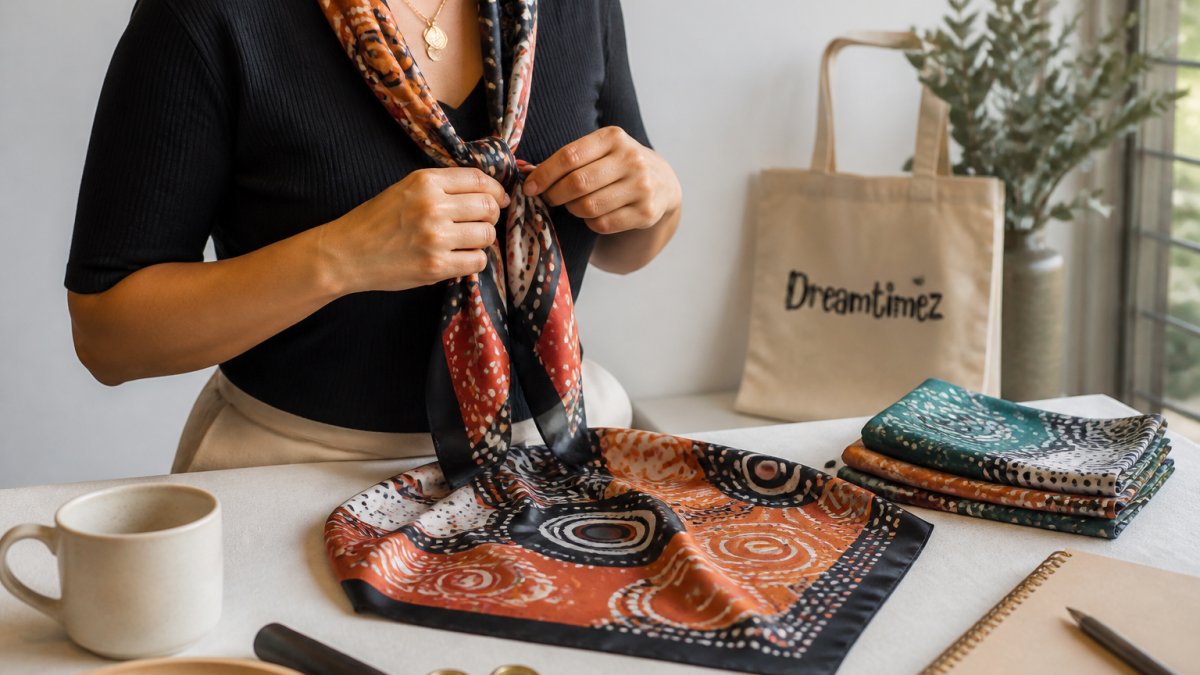
How to tie a square scarf:
- Fold the square in half, corner to corner, into a triangle.
- Bring the two long points around your neck and cross them at the front.
- Tie a single knot, then slide it slightly to one side.
- Fan the triangle flat across your chest so the print stays visible.
Silk needs a lighter hand than cotton or wool. Silk holds a knot well but creases if you pull it tight, so tie loosely and let the fabric sit.
| Scarf Type | Best Fold | Best Knot | Artwork Visibility |
|---|---|---|---|
| Square silk | Diagonal triangle | Loose single knot | High |
| Oblong silk | Flat band | Simple loop | Medium |
| Square cotton | Bias fold | Double knot | Medium |
| Long oblong | Folded in half | Wrap and tuck | Low |
Scarf Outfit Ideas and Cultural Respect When Wearing Indigenous Designs
Indigenous art scarves work with more outfits than most people expect, and wearing them respectfully matters as much as wearing them well. Respect means buying licensed work, naming the artist when you can, and letting the design lead rather than treating it as a trend.
Outfit ideas:
- Over a plain blazer, knotted at the neck, for a work look.
- Tied around a ponytail for a casual, everyday finish.
- Draped over a coat in winter, print facing out.
- Worn bandana-style on the head for outdoor days.
- Looped loosely over a plain dress for an elegant evening look.
Cultural respect when wearing Indigenous designs:
- Check that the artwork is licensed from the artist.
- Ask who the artist is, and share their name.
- Keep the print clean and visible, not hidden or cut.
- Store folded, away from harsh sun, to protect the fabric and the art.
Frequently Asked Questions
How do you wear a square Indigenous art scarf?
Fold a square scarf into a triangle, then roll or pleat it toward the long edge. Wrap the band around your neck once, bring the ends to the front and tie a loose knot. Keep the fold shallow so more of the artwork stays visible. For a headscarf, place the triangle over your crown, tie the ends at the nape and tuck the tail. Lighter fabrics hold a knot better; heavier weaves suit a simple drape.
How can you style an Indigenous art scarf with everyday outfits?
Treat the scarf as the focal point and keep everything else plain. A neutral blazer, a linen shirt or a dark coat lets the print lead. Match one colour from the artwork rather than introducing a new one. Wear a long oblong scarf looped once over a coat, or knot a small square scarf at the neck of a plain top. The same scarf works casually with denim and more formally over a dress.
How can you learn about the artist and story behind a scarf design?
Check the product listing or swing tag for the artist's name and the story behind the design. Buying from a retailer that licenses artwork directly from artists means the attribution travels with the product, and royalties continue to reach the creator. If the artist or story is not named anywhere, ask before you buy. Knowing the story also gives you something genuine to say when someone compliments the scarf.
Choosing a scarf means choosing whose story you carry, and that choice deserves care. Dreamtimez Australia licenses authentic Indigenous Aboriginal artwork directly from artists, pays ongoing royalties on every sale, and donates part proceeds from every Fly Net Hat to the Royal Flying Doctor Service. Shop Now and wear their art, and share their story.