


Table of Contents
- Indigenous Art Fashion vs Cultural Appropriation: What's the Difference?
- How to Buy Indigenous Art Ethically: A Practical Guide
- Indigenous Artist Licensing in Fashion: How It Works
- The Bottom Line
- Frequently Asked Questions
Last Updated: October 13, 2026
Indigenous Art Fashion vs Cultural Appropriation: What's the Difference?
Indigenous art fashion is clothing and accessories created by, or licensed directly from, Indigenous artists, who retain ownership of their designs and receive payment for their use. Cultural appropriation is when a non-Indigenous brand copies an Indigenous art style, motif, or symbol without permission, payment, or credit. The difference is consent, control, and compensation.
Clothing is wearable culture, and when a design is copied from a living artist's Country onto a mass-produced garment, the artist sees nothing. At Dreamtimez Australia, we license artwork directly from Aboriginal artists and pay ongoing royalties on every sale, because a design that carries someone's story should also carry their name.
How to Buy Indigenous Art Ethically: A Practical Guide
Buying ethically comes down to three questions: who made it, did they consent to its use, and are they paid.
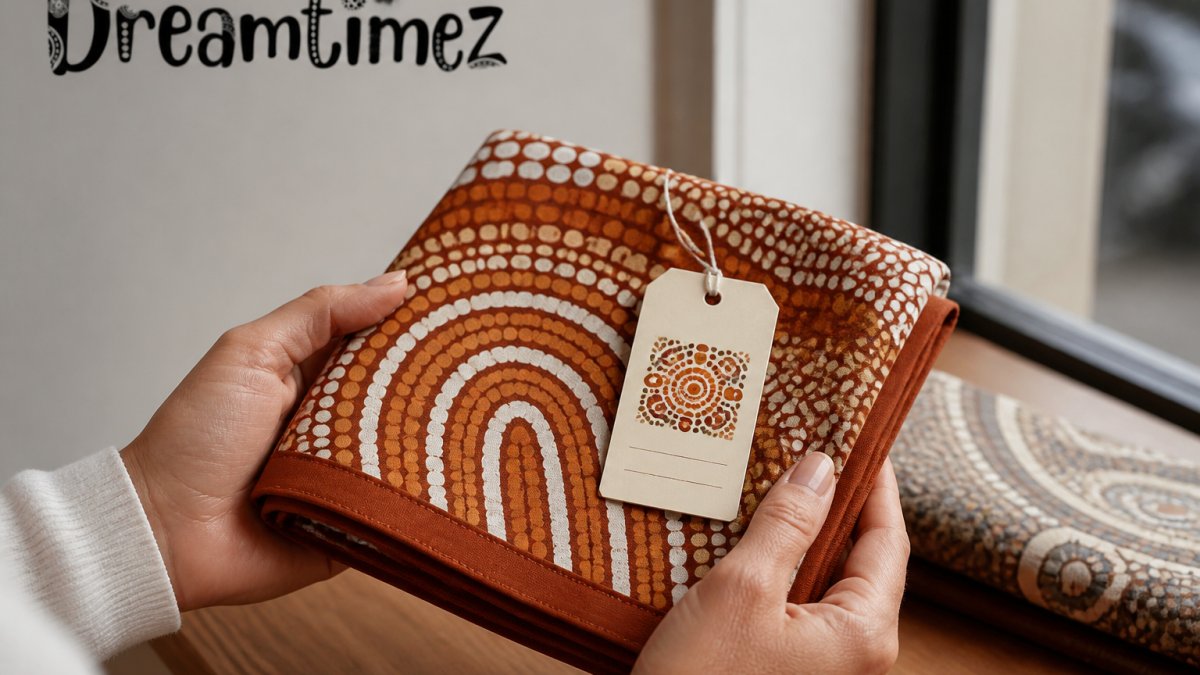
Cultural appreciation vs appropriation examples make the line clearer. Wearing a licensed scarf designed by an Aboriginal artist, with their name on the tag, is appreciation. Printing a generic "dot art" pattern onto a mass-market dress with no artist, permission, or payment is appropriation.
A practical buying checklist:
- Does the product name the artist or the licensed art centre?
- Is there a written licensing agreement behind the design?
- Does the brand state that royalties are paid to the artist?
- Is the artist's community or nation identified, not just "Aboriginal design"?
- Does the brand explain how it obtained permission for the artwork?
"Aboriginal-style" is a warning phrase, not a selling point: authentic work names a person. Style is easy to copy; permission is not.
For more on where the line sits, the Australia Council for the Arts protocols for working with Indigenous artists set out how consultation, consent, and attribution should work.
Indigenous Artist Licensing in Fashion: How It Works
Indigenous artist licensing in fashion is a formal agreement in which an artist permits a brand to reproduce their artwork on products, usually in exchange for a fee or ongoing royalties. The artist keeps ownership of the design; the brand gets the right to use it on agreed terms.
A standard licensing arrangement covers:
| Element | What it sets out |
|---|---|
| Scope of use | Which products, which artwork, which territory |
| Term | How long the licence runs and renewal terms |
| Payment | Upfront fee, ongoing royalties, or both |
| Attribution | How the artist is credited on the product |
| Approval | Artist sign-off on how the design is used |
| Limits | What the brand may not do with the artwork |
The part most people miss is approval: good agreements let the artist review how their work appears and say no to uses that misrepresent it.
Copyright is the other half of the picture. Australian copyright protects an artist's original work automatically, but it generally covers the specific expression, not a whole style or technique. That is why copying a "look" can be legal and still be appropriation. The Australian Copyright Council explains what copyright does and does not cover.
Some knowledge sits outside any contract. Sacred and restricted imagery, and designs belonging to particular communities, may not be available for commercial use at all, regardless of what a licence says.
The Bottom Line
The gap between appreciation and appropriation is not about intent. It is about whether an artist consented, was credited, and was paid. Get those three right and fashion becomes respect rather than extraction.
Frequently Asked Questions
What is the difference between cultural appreciation and cultural appropriation in fashion?
Cultural appreciation involves respectful engagement with another culture, often through collaboration, permission, and fair payment. Cultural appropriation occurs when elements are taken without consent, credit, or benefit to the originating community. In fashion, appreciation might look like a brand licensing a design directly from an Indigenous artist with ongoing royalties. Appropriation often involves copying motifs without permission or attribution, turning sacred or significant imagery into a trend for profit.
How can you tell whether Indigenous art on clothing is authentic?
Look for clear artist attribution and information about licensing or collaboration. Authentic products often name the artist, their community, and how they benefit from the sale. Check whether the brand explains its sourcing and payment model. If a design is described only as 'Indigenous-inspired' with no artist credit or community link, it may be inauthentic or appropriative. Ethical brands are transparent about their relationships with artists.
How can fashion brands work respectfully with Indigenous artists?
Brands should start by consulting with artists and communities to understand cultural protocols. This means seeking permission before using any designs, especially those with sacred or restricted elements. Licensing agreements should include fair compensation, ongoing royalties, and clear attribution. Brands should also avoid mimicking styles without consent and instead collaborate directly. Building long-term relationships based on respect and benefit-sharing is key to ethical practice.
Buying ethically should not require a research project. At Dreamtimez Australia, we license authentic Aboriginal artwork directly from the artists, pay ongoing royalties on every sale, and donate part proceeds from every Fly Net Hat to the Royal Flying Doctor Service. Shop Now and wear art that carries a name and a story.